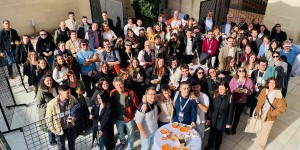
In the last week of November, the 25th Annual Meeting of the Spanish Society for Research on Cannabinoids (SEIC) was held in the Assembly Hall of the Faculty of Education of UNED, in Madrid. As on previous occasions, the meeting was mainly attended by young researchers, who presented the most recent advances in their work. The presentations once again showed the high level of scientific cannabinoid research carried out by Spanish groups.

The opening ceremony was led by the president of the SEIC, Cristina Sánchez, together with the vice-rector of Research, Knowledge Transfer and Scientific Dissemination of UNED, Javier Sanz, and the head of the local committee, Alejandro Higuera, who welcomed all the attendees.
The scientific session began with an inaugural lecture by Mauro Maccarrone, Professor of Biochemistry at the Department of Biotechnological and Applied Clinical Sciences of the University of L'Aquila (Italy). His presentation addressed the fundamental role of endocannabinoids as key regulators of lipid networks involved in the inflammatory response. It highlighted how these bioactive lipids integrate metabolic and immunological signals to modulate both peripheral and central inflammatory processes, establishing a conceptual framework that connects lipid metabolism with neuroinflammation and various associated conditions.
After this talk, sessions began with a first block dedicated to medical chemistry and consisting of four presentations, in which advances in the design of new cannabinoid compounds with therapeutic potential were presented. The research showed how it is possible to develop more targeted drugs, through precision chemistry and nanotechnology strategies, which target specific receptors and have fewer side effects, highlighting their application in inflammatory, cardiovascular and neurodegenerative diseases.
After the lunch break, the meeting resumed with a second session of presentations focusing on cognitive functions. In this block, four papers were presented that analysed the involvement of the endocannabinoid system in processes such as learning, memory and stress response. Special emphasis was placed on the role of glial cells, in particular astrocytes, and their communication with neurons, as well as on the influence of metabolism and diet on brain function, supporting an integrated view of the connection between the brain and the rest of the organism.
The coffee break served as an opportunity for the presentation of papers in poster format. This was followed by the usual "Hot Topic", which this year featured the participation of Olga Valverde, professor in the Department of Medicine and Life Sciences at Pompeu Fabra University. Her talk was dedicated to the VICT3R project and addressed the potential of virtual control groups to transform neuroscience research. She explained how, by reusing and recombining previous experimental data, it is possible to generate digital controls that can fully or partially replace traditional control groups in animal studies, reducing their use and the costs and times of the experiments, and improving statistical power and reproducibility. The alignment of this approach with the ethical principles of 3R and its particular relevance in complex and long-term research was also highlighted.
The third session of oral presentations focused on motivational circuits and energy metabolism. These addressed how cannabinoids regulate brain circuits related to motivation, reward and eating behaviour, providing clues to understanding the attraction to certain foods or substances and pointing to the endocannabinoid system as a potential therapeutic target for obesity and metabolic disorders.
The second day of the meeting began with a session dedicated to cannabis and mental health. It examined the effects of cannabis and other drugs on the brain, especially during particularly vulnerable stages such as adolescence. Experimental models explaining the increased risk of psychiatric disorders and long-term alterations in brain development, as well as biological mechanisms shared between addiction and mental illness, were presented.
After another coffee break and the poster presentations, the fifth session of oral presentations focused on neurodegenerative diseases. This session demonstrated strategies based on the modulation of the endocannabinoid system to protect neurons, reduce brain inflammation and improve cognitive functions. The results, obtained in preclinical models, open new perspectives for the development of more effective therapies.
On the occasion of the 25th anniversary of SEIC, a round table was organised with the participation of all the presidents of the Society since its foundation. Moderated by Ester Aso, this session reviewed the origins of the SEIC, the scientific and social context of its creation and the main milestones in its history. In addition, current challenges in the field were discussed, such as clinical translation, interdisciplinarity and the training of new generations of researchers, concluding with a reflection on the future of cannabinoid research in Spain and its biomedical and social impact.
After the lunch break, the meeting continued with the last session of presentations for the day, dedicated to neurological diseases and neuroinflammation. The role of brain inflammation in conditions such as epilepsy and amyotrophic lateral sclerosis was discussed, as well as how cannabinoids can modulate these inflammatory responses and exert neuroprotective effects, highlighting the importance of controlling inflammation to slow the progression of many neurological diseases.
After the coffee break and the third poster session, a moving tribute was paid to Paco Molina, a leading researcher in the field of cannabinoids. The event, presented by Carmen Guaza, supervisor of his doctoral thesis and close collaborator, highlighted both his relevant scientific contribution and his human qualities, his commitment to research and his role as a mentor, highlighting the personal and professional mark he left on the scientific community.
The third and final day of the meeting focused on two major biomedical challenges: ageing and cancer. Studies were presented showing how modulating the endocannabinoid system can help preserve cognitive functions during ageing and improve the efficacy of anti-tumour treatments, especially in brain tumours, positioning cannabinoids as potential therapeutic allies.
Lastly, the meeting recognised the scientific excellence of young researchers by presenting the Awards for the Best Predoctoral and Postdoctoral Publication of 2025. The predoctoral prize was awarded to Cristina Izquierdo for her work "Long-term consequences of adolescent exposure to the synthetic cannabinoid AB-FUBINACA in male and female mice", published in iScience. The postdoctoral prize went to Leire Ayerra for the article "Activation of central cannabinoid type 2 receptors, but not on peripheral immune cells, is required for endocannabinoid-mediated neuroprotection in Parkinson's Disease", published in Brain Behavior Immunity.

Finally, to close the meeting, the prizes for the best oral communications and posters presented at the meeting were awarded, and the event was concluded following a farewell and closing words by outgoing SEIC secretary Dr. Onintza Sagredo.
SEIC Team