By Anne Katrin Schlag

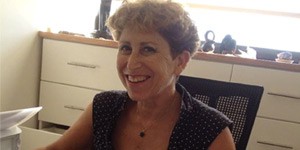
I am a Chartered Psychologist and Head of Research at Drug Science. I completed my PhD in Psychology at the London School of Economics and Political Science, before working as Lecturer at King's College London where I developed my expertise across the spectrum of science and policy making, risk perception, risk management and risk communication before joining Prof David Nutt at Drug Science in 2014. I hold Honorary Senior Fellowships at both Imperial College London and King's College London and am mum to three beautiful children.
Within my role at Drug Science, I lead the research for the Medical Cannabis Working Group (MCWG), and the Medical Psychedelics Working Group. Our MCWG is focused on advancing the scientific evidence base on medical cannabis, including Real World Data, and on the continued development of education and stakeholder communication about medical cannabis. I am passionate about improving and accelerating access to medical cannabis for the people who need it the most. Below I outline a particular case of this work which is very dear to me, both as a scientist and even more so as a mother.
Introduction to medical cannabis in the UK: Current regulations and challenges
In the UK, cannabis was made a medicine on 1 November 2018, largely as a result of patient pressure, including high-profile media campaigns for children whose intractable epilepsy had been remarkably improved (such as Alfie Dingley of whom more later).
The current National Institute for Heath and Care Excellence (NICE) guidelines recommend the prescription of three cannabis-based medicinal products (CBMPs) for the treatment of four main conditions: Sativex for spasticity of adults with multiple sclerosis (MS), Nabilone for chemotherapy-induced nausea and vomiting, and Epidyolex for severe treatment-resistant epilepsy, i.e. Lennox-Gastaut syndrome and Dravet syndrome. These guidelines, based on randomised controlled trial (RCT) evidence only, are very limiting, excluding the majority of patients (such as patients requiring CBMPs for chronic pain treatment), as well as most CBMPs that could potentially be available to patients, such as full spectrum flower.
In the UK medical cannabis remains regulated as an unlicensed medicine, making National Health Service (NHS) prescriptions challenging. This means that the majority of prescriptions are written privately, which continues to present cost issues for patients with chronic conditions who are forced to pay hundreds of £s per month for their medicine.
Consequently, the number of full spectrum NHS prescriptions remains in the single digits. Total patients (mostly privately paying) number about 85,000, with about 200 doctors and other prescribers, operating out of 43 clinics. Nearly all CBMPs prescribed are flower and oil (about 80:20), with a tiny number of capsules. Patches/creams/suppositories/edibles are not currently available to UK patients.
Further complicating patient access is the requirement for specialist doctors to initiate a prescription, rather than a General Practitioner (GP). In addition to the NICE guidelines, doctors are influenced by the guidelines produced by the Royal College of Physicians (2018)(1) (for pain and nausea) and by the British Paediatric Neurology Association (2018)(2) (for childhood epilepsy), which recommend the prescription of medical cannabis only as a last resort when other conventional treatment has not been effective.
Medical cannabis and paediatric epilepsy
After the law change in 2018, many patients in desperate need expected CBMPs to become available on the NHS, however, this expectation did not materialise. The first person to receive an NHS prescription was Alfie Dingley, due to the tireless campaigning efforts of his late mother Hannah Deacon and Prof Mike Barnes, a neurologist willing to prescribe against the guidelines- because the real-world evidence was so compelling that the decision not to prescribe for this patient would simply have been unethical. Mike Barnes and Alfie's supportive NHS GP both applied for, and eventually received, a Schedule 1 license in June 2018, allowing them to issue the first full spectrum NHS prescription.
I got to know Hannah in 2018 when we launched our MCWG. Hannah was keen on us to systematically and rigorously record the impact of medical cannabis treatment on her son, to ensure that the evidence would be scientifically documented, and in turn, accepted by the wider medical profession. The hope was that publishing these results in the high-level peer reviewed literature would change the minds of potential prescribers and decision makers, enabling medical cannabis access to other children in similar need.
Together with Hannah and other parents willing to share their stories our Drug Science team (including Prof David Nutt and Dr Rayyan Zafar) was instrumental in reporting the extraordinary impact of CBMPs as a treatment for various forms of treatment resistant epilepsy. Our case series of studies evidently showed the effectiveness of whole-plant medical cannabis in this group of patients suffering with severe intractable childhood-onset epilepsies. The highly significant reduction in monthly seizure frequency in our group clearly demonstrated the feasibility for this medication in such patients (3).
We complemented our quantitative study with a qualitative approach, interviewing parents/carers of these patients in-depth to fully understand their current situation, and to contextualise the previous findings (4).
In addition to seizure reduction, carers reported sustained and significant improvements in behavioural, psychological and cognitive faculties associated with medical cannabis use, which had a huge impact on quality of life, for the children, as well as for the families.
Evidently, the benefits of medical cannabis for these patients far outweigh any associated risks. Many of the issues raised in this study went beyond the science of medical cannabis per se. Rather, they turned out to be ethical and political issues, related to the wider issue of trust and power in society, and associated challenges of the doctor and patient relationship, highlighting the importance of including patients in decision-making about their medical plans and the value that should be given to their reported outcomes and wishes.
Concluding remarks
Despite the legalisation of CBMPs in the UK over seven years ago, today there remains a scarcity of NHS prescriptions, and many patients continue to face unsustainable financial costs to acquire their medicines.
Whilst the above data shares the limitations of other real-world evidence, our research provides the evidence to support the further introduction of CBMPs into the NHS within current NICE prescribing guidelines. Such a move would be hugely beneficial to the above families, who in addition to having the psychological distress of looking after their chronically ill children, still today also must cover the crippling financial burden of their medication.
In relation to paediatric epilepsy, whilst large scale RCTs remain lacking and unfeasible, these children are the evidence needed to change the limiting UK prescribing recommendations at present. The scientific evidence is the key part of the puzzle- but we also need to consider the ethics- it is unethical not to prescribe. As a fellow mum, it is impossible for me to imagine not being able to access a medicine that could potentially help my severely ill child achieve a better quality of life.

Acknowledgements and further info
I would like to express my gratitude to the many parents/carers who so courageously shared their stories and highlight the important work that they have been doing. In memory of Hannah, we are carrying forward this work:
"Never doubt that a small group of thoughtful, committed citizens can change the world. Indeed, it is the only thing that ever has".
- Margaret Mead
The Medcan Family Foundation is continuing the vital work to improve medical cannabis access for children suffering from treatment resistant paediatric epilepsy (5).
The Medical Cannabis Clinicians Society provides expert guidance, peer support, and CPD-accredited training in the UK (6).
Drug Science is an independent, science-led charity, bringing together leading drugs experts from a wide range of specialisms to carry out ground-breaking research into drug harms and effects. By telling the truth about drugs, Drug Science engages the public, media, policy makers and academics, equipping them with the knowledge and resources to enact positive change (7).